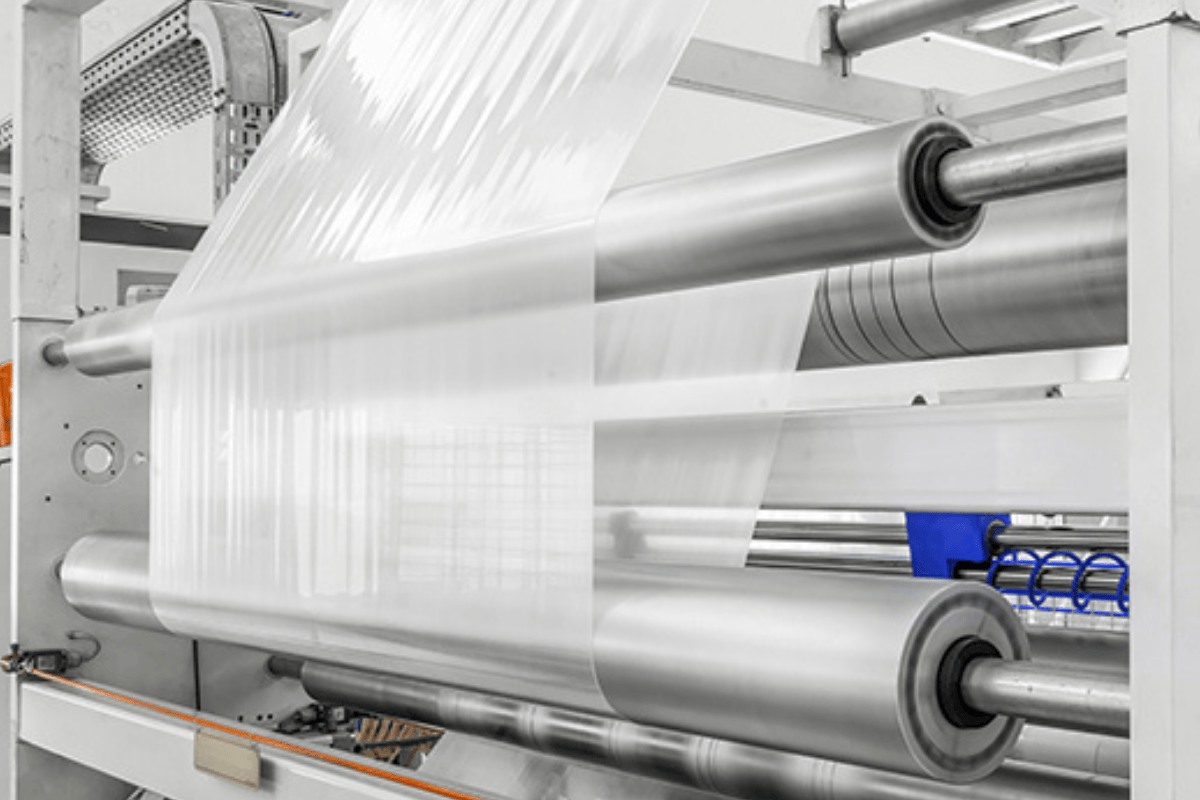
Films can be texturized to create additional functionality, ranging from visual effects such as iridescence to microscopic functionality that supports microfluidic or biomimetic properties.
Embossing
Texturization of the film surface to create additional functionality
Embossing is the process by a texture or pattern imparted onto the surface of a film to create additional functionality. Embossing patterns range from very light texturization to extreme.
Here’s what you can gain from using an embossed base film or overlaminate.
Visual Aesthetics
Elimination of Glare. Embossing a film’s surface can produce a matte appearance which can increase readability of large format graphics by eliminating glare.
Tactile Interest. Texture can increase the appeal of graphics that will be touched, such as promotional graphics on tabletops, counters, walls, labels, and P-O-P displays.
Visual Appeal. Texture can also make graphics look more realistic by giving a 3D appearance to 2D images of textured surfaces, such as bricks or sand.
Performance Functionality
Slip-Resistance. Graphics for floors and carpets must pass slip-resistance testing pursuant to UL 410 standards. One way to accomplish the necessary results is by embossing the overlaminate, so that dry feet won’t catch and wet feet won’t slip.
Outdoor Durability. Embossed films degrade more slowly than smooth films, providing greater resistance to weather and UV rays.
Biomimicry. Use microscopic patterns that mimic nature to achieve specific results. For example, a shark skin pattern mimics the texture of shark skin, causing it to be resistant to bacterial growth. A Motheye pattern can be used to refract light through a film with eye-catching effects.
Custom Patterns
Flexcon works as a technology partner with a variety of companies to achieve specific performance results on high-tech products.